Why dancers end up here
Dancers arrive with a problem most photographers create for them: they already know how to move, and they've just been asked to stand still and smile.
You've spent years building lines that read from thirty feet away in bad light. Then someone puts you on a white backdrop, tells you to relax, and shoots you like a headshot. The photos come back technically fine and completely dead — none of the thing you're actually good at made it into the frame.
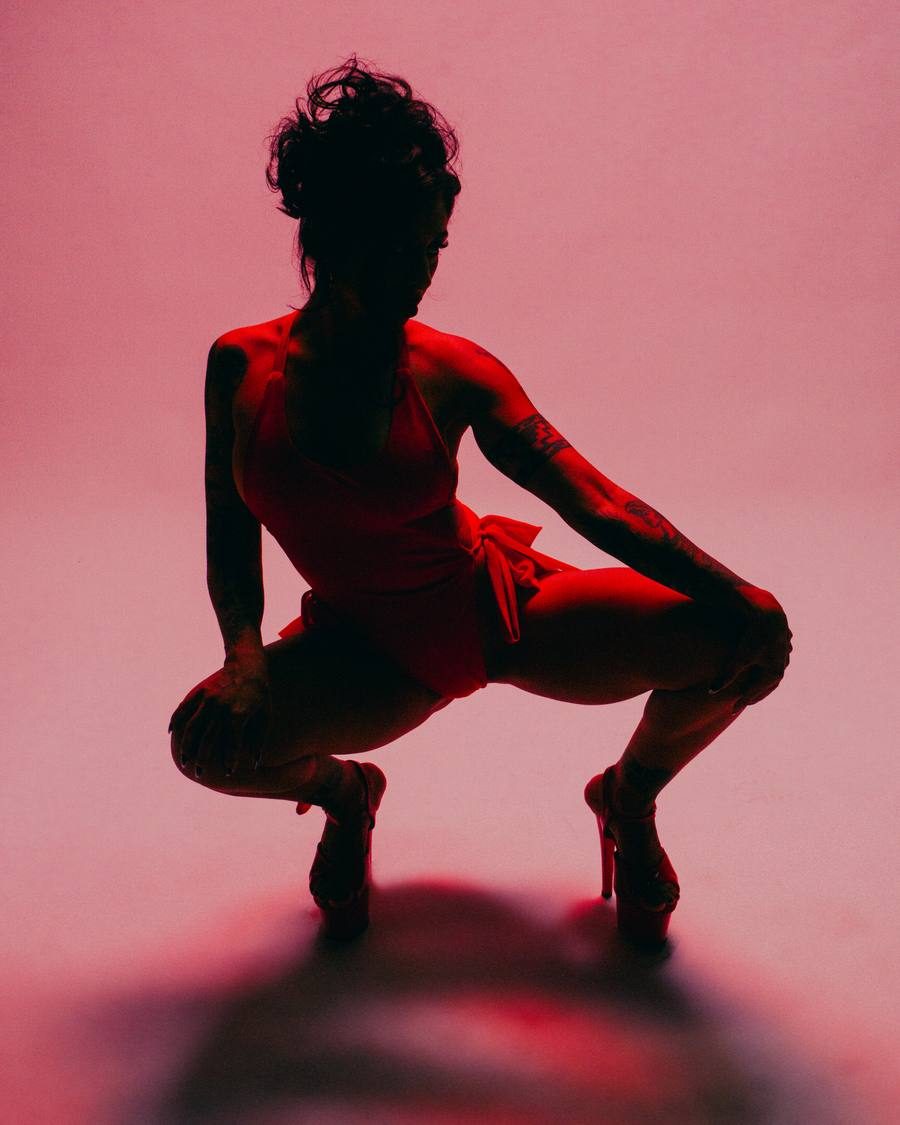
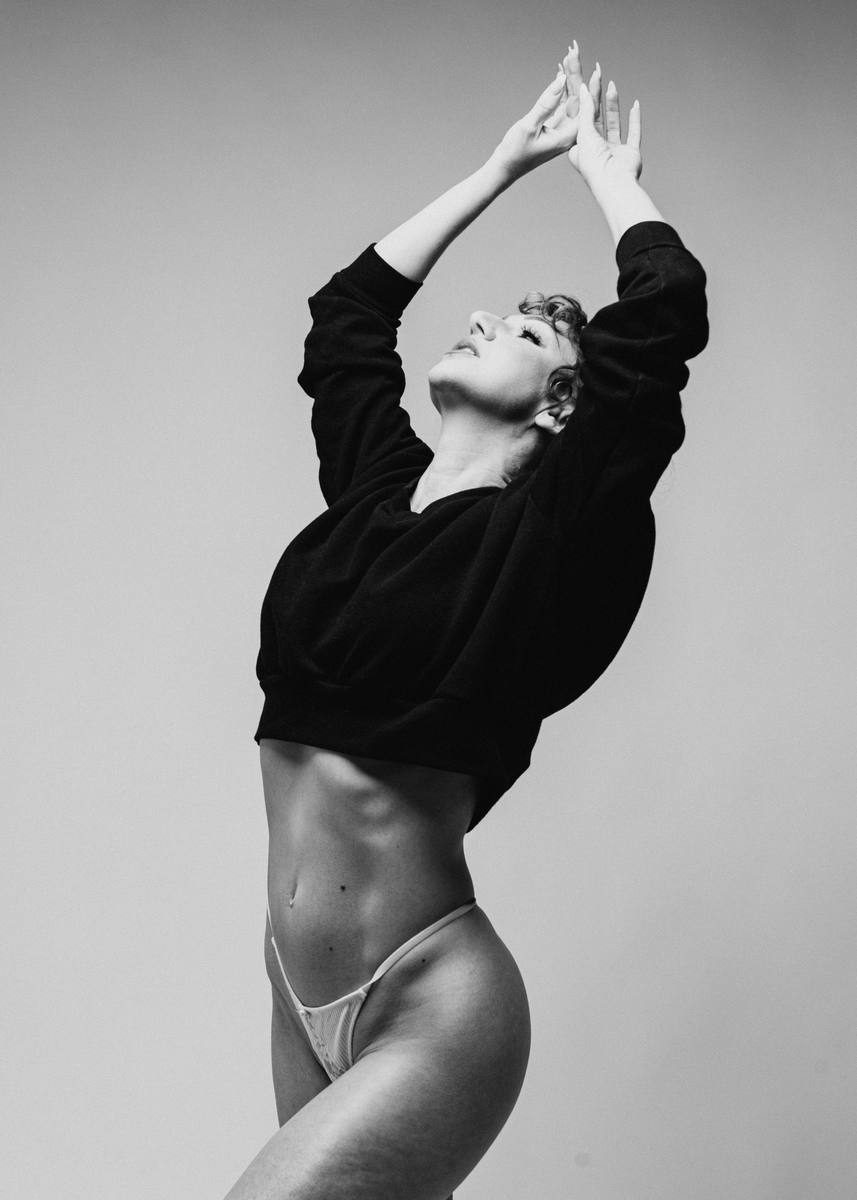
We shoot the movement. Extension, arch, the shape of a foot in a heel, the half-second in a transition where the whole line is on. That means shooting more frames, shooting faster, and treating your body like the instrument it is instead of a subject that needs to hold still.
We shoot movement, not poses
Practically, a dancer session runs differently from a portrait session:
- You move; we chase. Rather than setting a pose and locking it, we'll often have you run a phrase, a floor sequence, or a transition repeatedly while we work the timing.
- Misty coaches the in-between. You know the trick. What kills a dance photo is usually the face, the trailing hand, or a foot that went sickled two frames early. That's what she's watching and calling out.
- Tethered monitoring earns its keep here. You can walk over between sets and see your own lines on a big screen. Dancers use this harder than any other client we have — it turns the session into something closer to a rehearsal with instant playback.
- We shoot a lot. Your gallery includes every frame we shoot, so the volume is on your side.
Light that reads like a stage
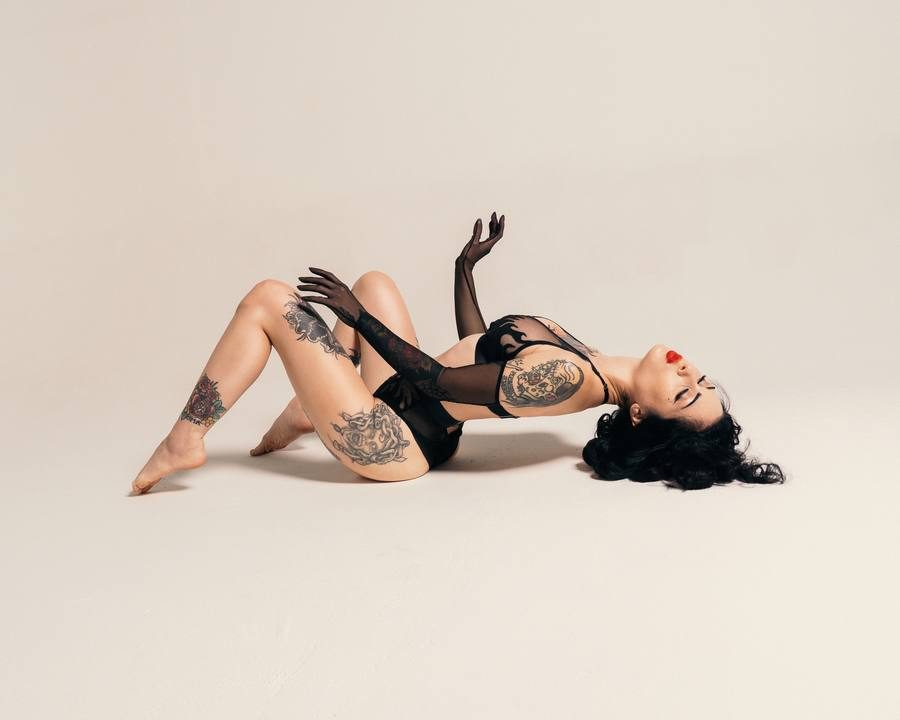
Stage lighting and studio lighting are different animals, and a lot of dancer photos fail because they're lit like a corporate portrait — flat, even, and kind to nothing.
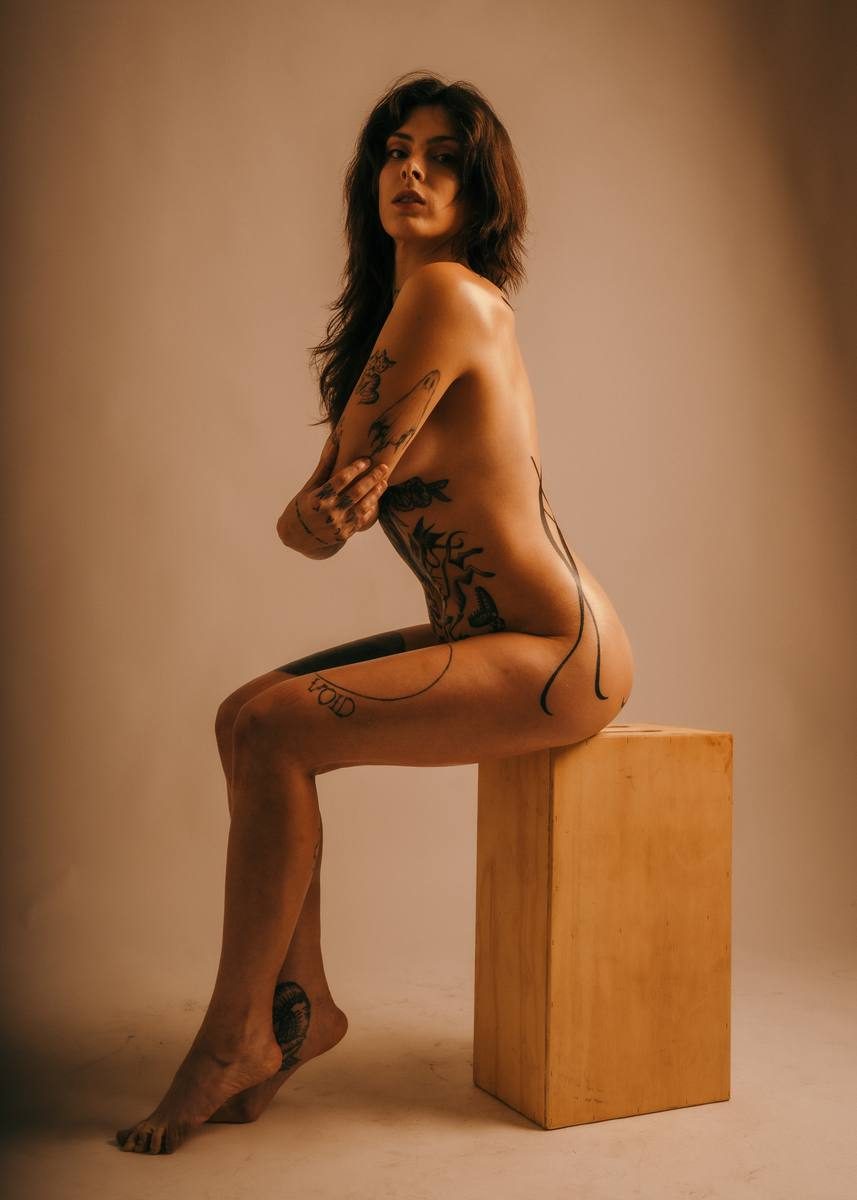
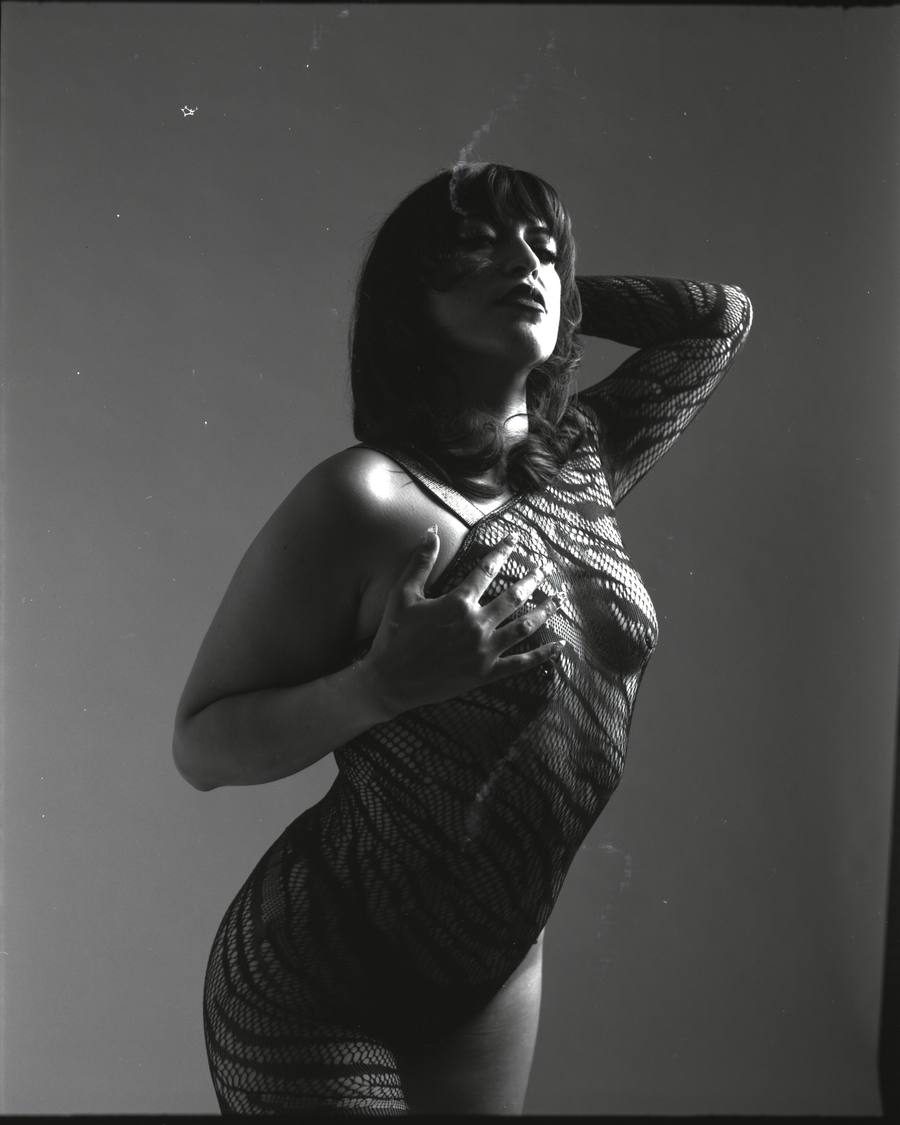
- Hard light for definition. A hard source carves muscle, tendon and shoulder. It's the difference between a photo of a body and a photo of an athlete.
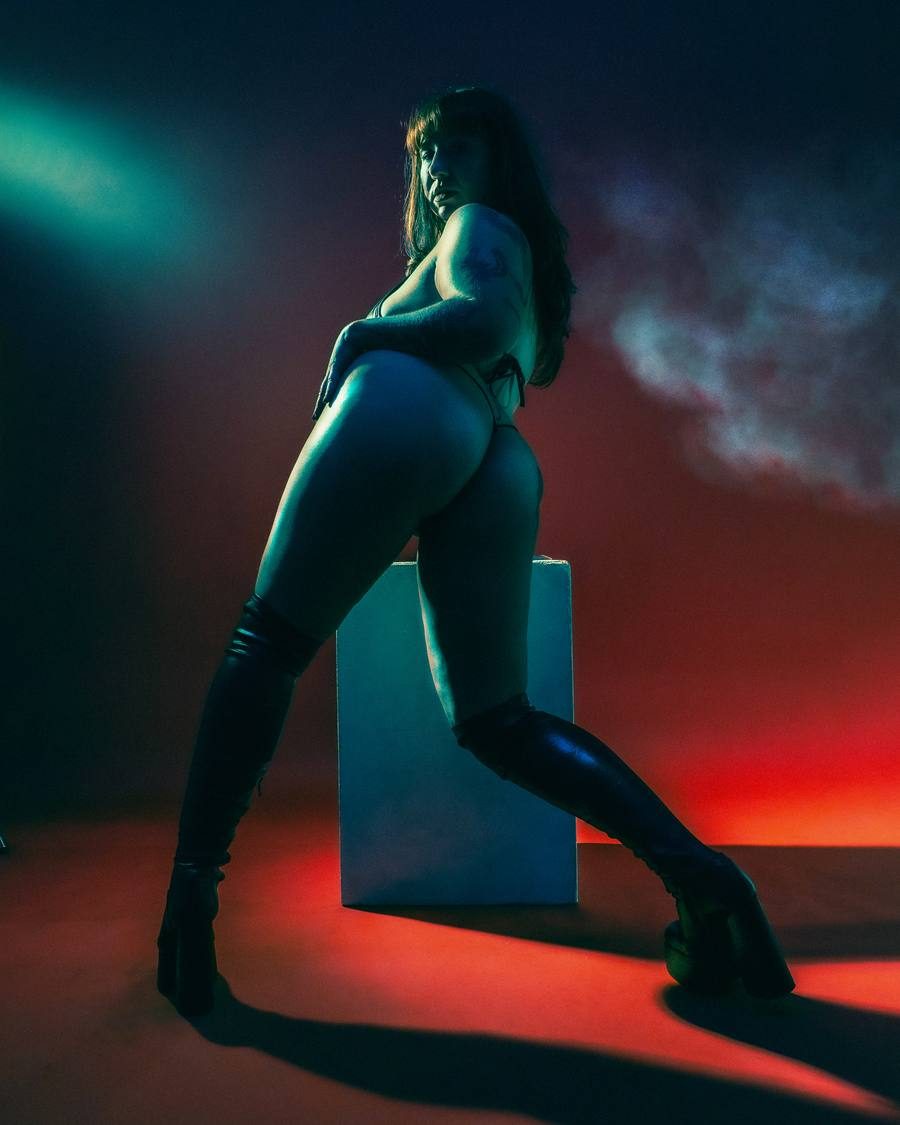
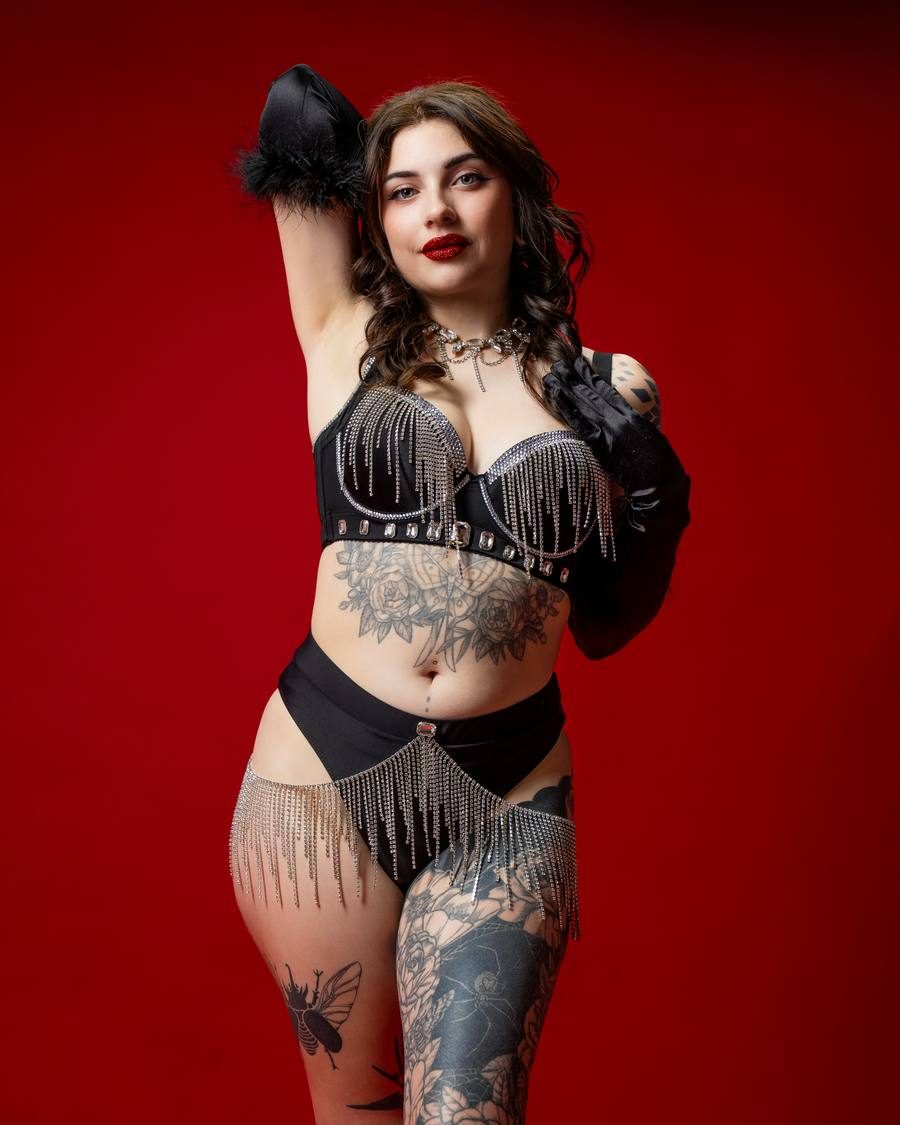
- Color gels for stage feel. Reds, teals, magentas — the palette you actually perform in, controlled instead of whatever the club's rig was doing that night.
- Backlight and silhouette. Ideal when the shape is the whole story, and useful if you want images that don't obviously identify you.
- Deep shadow. Black backdrop, one source, everything else falls away.
Boots, wardrobe, and what to bring
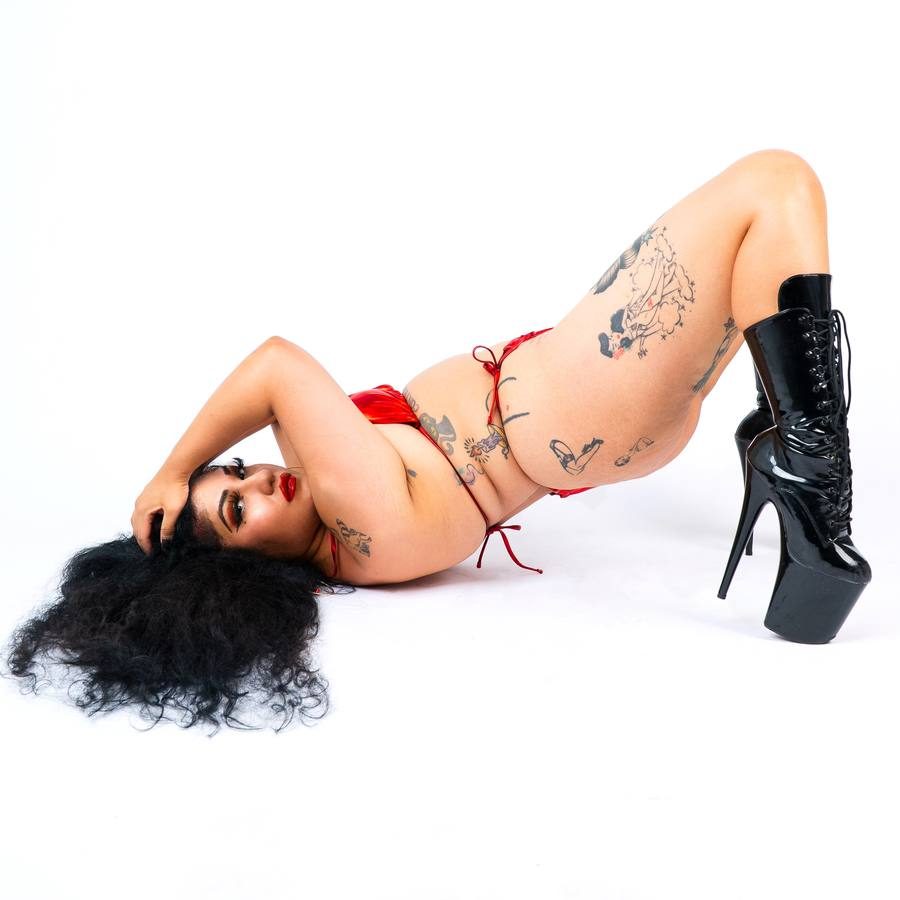
- Bring the boots. Platforms, Pleasers, thigh-highs, whatever you actually perform in. They change your whole line and they photograph enormously well.
- Bring more outfits than the session needs. We work up to three looks across two backdrops; having five to choose from means we pick the ones that are working, not the ones you happened to pack.
- Oil, glitter, wet-look, latex. All of it reads beautifully under hard light. Tell us in advance if you're planning something that needs setup or cleanup time.
- Knee pads, grip aid, a towel, a robe. Floor work is floor work.
- Your music. A playlist runs the whole session. Bring the set you actually perform to — it changes how you move.
Stage names, privacy, and who sees your gallery
For a lot of dancers this is the deciding factor, so here it is plainly:
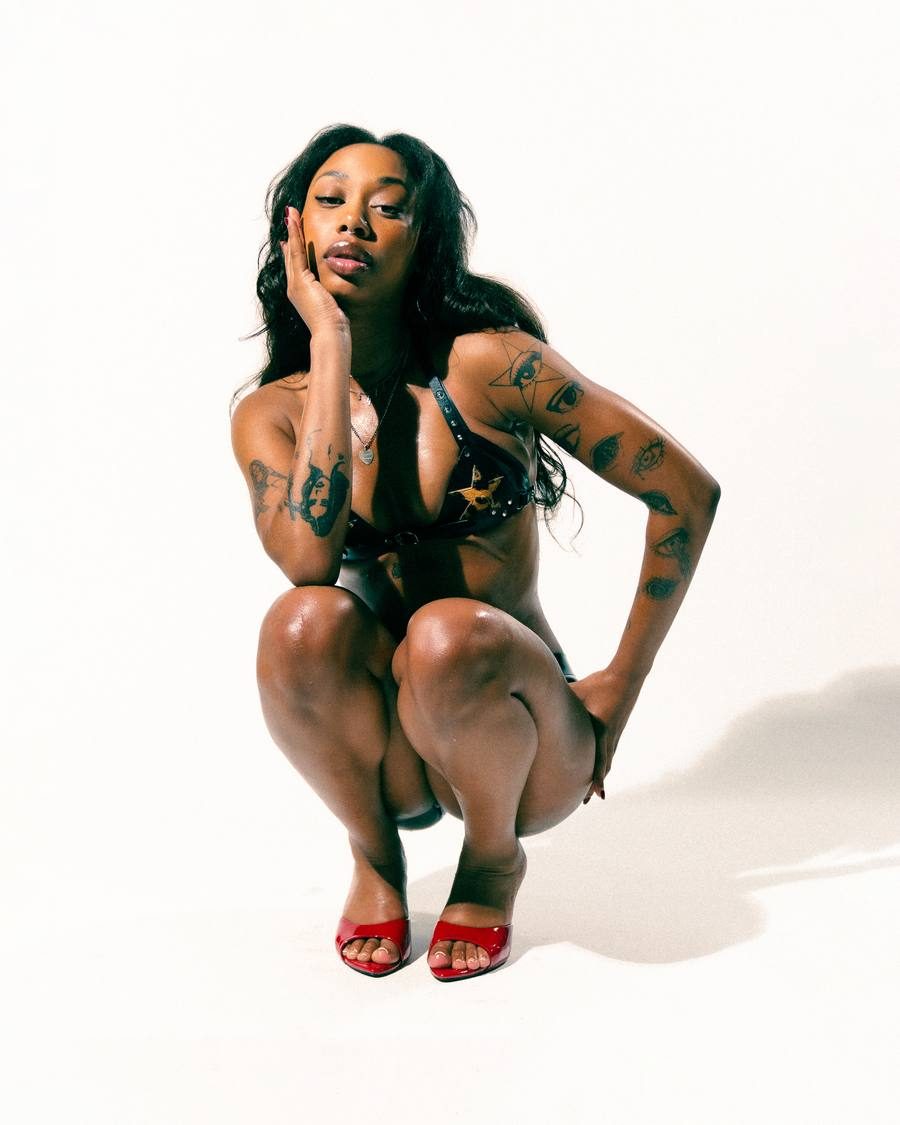
- You can stay anonymous. You are never required to share your identity publicly.
- Work under your stage name. That's how we'll refer to you and credit you.
- The waiver needs your legal name for liability purposes only. It stays with us and goes nowhere else.
- Nothing is posted by default. Your gallery is delivered privately. Whether any of it ever appears on our feed is your call, not ours.
- Closed set. Two people in the room — Nani and Misty — plus anyone you bring.
Keeping up with your content calendar
Dancers don't have a photo problem once a year; they have one every week. Club promo, feature announcements, competition posts, subscription platforms, a booker who wants fresh images by Thursday.
Two things help with that:
- Shoot for volume, not for one hero shot. Three looks, multiple lighting setups, and a full unedited gallery on top of the edits gives you weeks of posts from one hour.
- Book on a cadence. We run monthly content plans for creators and performers who need new photos on a regular schedule — shorter sessions, a standing spot on the calendar, priority booking and faster turnaround than the standard queue. Ask us for the current rate card when you inquire.
- BTS reel — $100. Raw footage plus a cut 30-second reel. Vertical video outperforms stills on every platform you're posting to.
- Polaroid pack — $50. Instant film shot on set. Signed one-of-ones sell.
- Medium format film — $50 a roll. 10–12 frames with real grain, scanned and delivered digitally.
What to book
| Package | Time | Best for | Price |
|---|---|---|---|
| The Session | 1 hour | A focused set — one or two looks, a specific promo need | $400 |
| The Full Treatment | 2 hours | Most dancers. More looks, more lighting setups, time to actually warm up | $650 |
Both include Nani shooting, Misty coaching, the dressing room, and your full styled and edited gallery. If you're deciding: two hours is the better buy for movement work. Bodies need warming up, boots need breaking into, and the best frames in a dance session are rarely in the first twenty minutes.
A 50% deposit holds the date; the rest is due the day of. Send an inquiry with your stage name, the kind of work you do, and what the photos are for, and we'll come back within 48 hours.
Related reading: how we handle comfort, consent and posing coaching, and what a standard studio portrait session looks like.
Dancer photography FAQ
Yes — they're the clients we shoot most. Pole, burlesque, aerial, club, competition and stage performers all book with us regularly at our Signal Hill studio in the Long Beach area, with easy access from Los Angeles and Orange County.
Tell us what you'd like to bring in your inquiry and we'll tell you exactly what the space can accommodate before you book. Some setups work in the room and some don't, and we'd rather sort that out in advance than on the day.
Yes. You're never required to share your identity publicly, we'll credit you under your stage name, and nothing from your session gets posted unless you want it posted. The waiver uses your legal name for liability reasons only and stays with us.
Your gallery includes every frame we shoot, delivered with our full styled edit — color grading, exposure, contrast and the cinematic look. Movement sessions run high frame counts, so expect a lot. Retouching on your selected favorites is an optional $15 per photo.
Yes. We run monthly content plans for performers and creators who need fresh photos on a regular schedule — a standing spot on the calendar, priority booking, and faster turnaround than the standard queue. Ask for the current rate card when you inquire.
Two, for most dancers. The Full Treatment is $650 for two hours and gives you more looks and more lighting setups, plus the warm-up time that movement work genuinely needs. The one-hour Session at $400 is better suited to a single focused promo look.